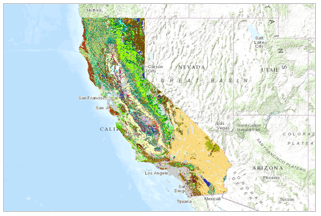
Goal: In partnership with natural resource managers and scientists, identify climate-smart conservation actions that will maximize the adaptive capacity of priority species, habitats, and ecosystems to support an ecologically connected Central Valley landscape.

The CA LCC is bringing partners together to cooperatively agree on strategic climate-smart adaptation goals, objectives, strategies, and actions for the California Central Valley landscape. The project area is the Central Valley due to its high vulnerability to numerous stressors including continuing land use changes, increasing temperatures, drought, and loss of important habitats. The target audience is natural resource managers and decision makers in the Central Valley. 

The approach involves the following steps:

  1. Define goals and identify priority natural resources
  2. Assess vulnerability of priority natural resources
  3. Identify adaptationn strategies and actions
  4. Partners implement adaptation strategies
  5. Monitor effectiveness and revise strategies and actions

Project description, deliverables, funding, and proposal.


Central Valley Data Gallery

Working Documents

  • Vulnerability Assessment Workshop Executive Summary (file unavailable) and Full Meeting Report (file unavailable)

Meetings

  • Vulnerability Assessment Workshop - October 8-9, 2015
  • Scenario Planning Workshop - March 3, 2015
  • Kick-Off Meeting - October 7, 2014

Background Materials:

  • Process Outline (file unavailable)
  • Project Charter (file unavailable)
  • Team Memberships (file unavailable)
     
  • Communication & Engagement Plan (file unavailable)


    Contact Information:

    Debra Schlafmann, CA LCC Coordinator: Debra_Schlafmann@fws.gov

    Rebecca Fris, CA LCC Science Coordinator: Rebecca_Fris@fws.gov

    Project Deliverables:

    • Identification of priority resources collectively developed by a broad set of partners
    • Climate-smart adaptation strategies developed for the priority resources based on vulnerability assessments and/or scenario plans
       
    • Building from the adaptation strategies, spatially explicit conservation options that will support resilience and adaptation of priority resources
       
    • An online toolbox and outreach plan to help partners use and apply the conservation options for their organization. 
       
    • A “lessons learned” document to inform similar efforts.